Chapter 01— Course Overview
What is the UI/UX Design Course at Pikazzo Institute?
Comprehensive project-based training programme, Pikazzo Institute’s UI/UX Design Course in Chandigarh takes you through the entire product design lifecycle from understanding users and defining problems to wireframing and prototyping to delivering polished, high-fidelity UI designs and tested, validated digital products. While other IT institutes teach UI/UX as a software course with tutorials on Figma, Pikazzo teaches UI/UX as the creative discipline that it actually is. Our students learn design thinking, visual design principles and human psychology along with every tool in the professional product design stack. That combination of creative intelligence and technical fluency is what product managers, startup founders, and design leads are really looking for when they hire.
Software & Tools Covered
| Category | Tools Covered |
|---|
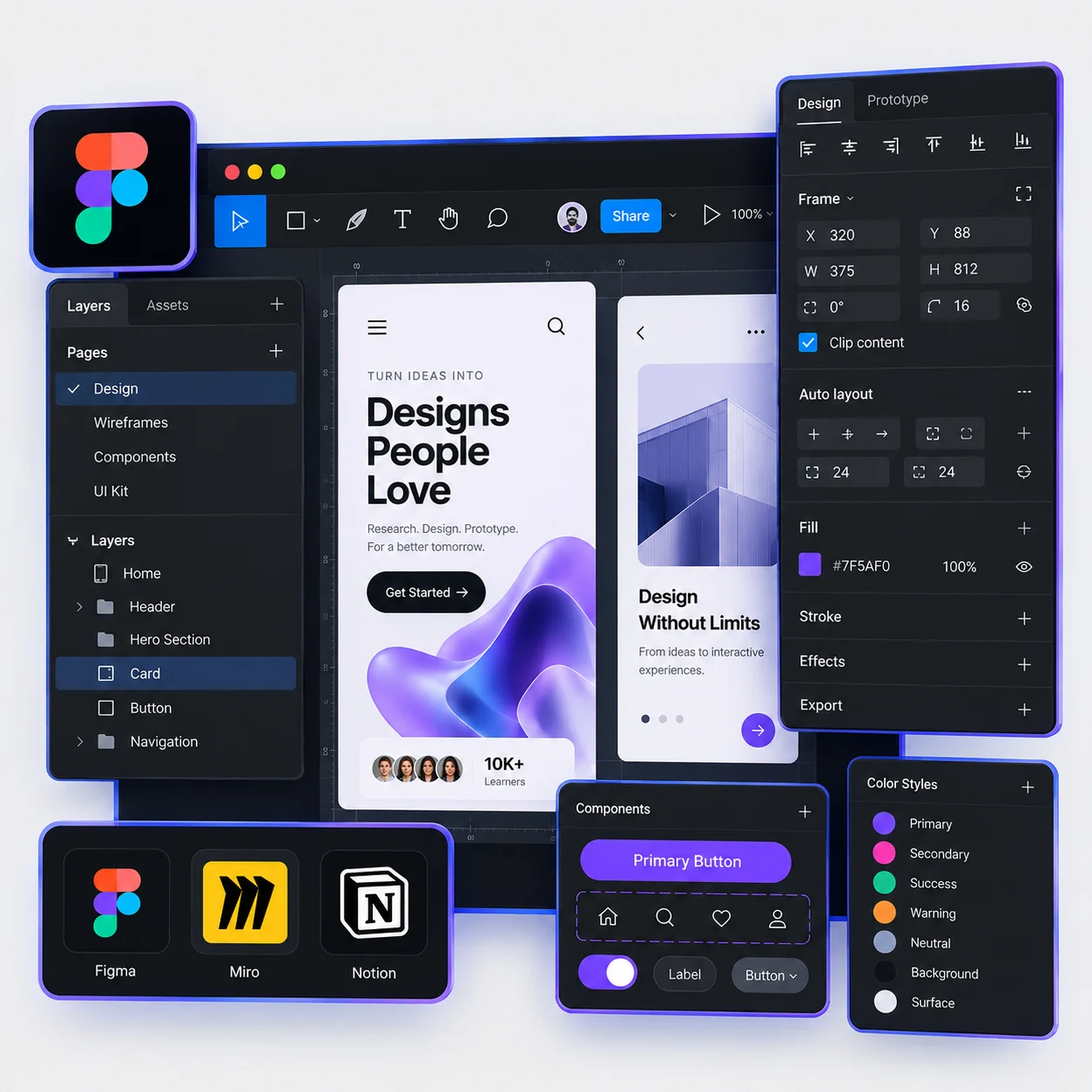
| Figma | Primary UI/UX design tool wireframes, high-fidelity design, components, design systems, prototyping, developer handoff |
| Framer | AI-powered design + no-code website building & publishing |
| Maze | LRemote usability testing, heatmaps, task analysis & UX validation |
| Notion | Design documentation, research repositories & UX case study writing |
| Adobe Photoshop | Image editing, asset preparation & moodboarding |
| Adobe Illustrator | Icon design, illustration & vector asset creation for UI |
| ChatGPT / Claude | UX research synthesis, persona writing, micro-copy generation |
Chapter 02— What You Will Learn
Complete UI/UX Design Course Module
Introduction to UI/UX Design
Introduction to Accessibility
Qualitative vs Quantitative Research
Usability Testing Introduction
Introduction to Design Systems
Design System Documentation
High-Fidelity Prototyping
Identifying Usability Problems
Introduction to AI in UI/UX
Competitive Research Assistance
AI-assisted Information Architecture
AI-assisted Content Design
AI-generated Visual Assets
Rapid Prototyping with AI
AI-assisted Usability Analysis
AI for Design Documentation
Responsible AI and Copyright
Product Design Fundamentals
Jobs to Be Done Introduction
Service Blueprint Introduction
Design for Different Screen Sizes
Accessibility Fundamentals
Conversational Interfaces
Voice Interface Introduction
Design System Documentation
Personal Portfolio Website
Design Interview Preparation
Chapter 03— Why a Creative Foundation Will Change Your Design Career Forever
The Edge of Creative Arts
You can learn Figma in any IT institute in Chandigarh. They lack the faculty, culture, and curriculum to teach what makes designs exceptional rather than merely functional: creative intelligenceWhat a Creative Arts Foundation Offers a UI/UX Designer:Visual Hierarchy, Not Guesswork This discipline is a design skill; it’s based on visual arts training, not software tutorials. This means knowing why the user’s eye scans the screen in a certain way, why some things grab their attention, and how to design that attention toward particular actions. At Pikazzo, students are taught visual hierarchy as a discipline and apply it to all the UIs they build.Typography as a Design System Typography in digital products is not about choosing a font. It involves developing a complete scale of type systems, weights, spacing, line heights, and contrast ratios that serve both aesthetics and readability across different device sizes. Pikazzo’s graphic design and typography programme gives UI students a level of typographic knowledge that the competition simply does not offer.Colour Theory for Interface Design: Colour in UI is not decoration; it is communication. Colour signals hierarchy, guides actions, creates emotions and establishes a sense of brand. Pikazzo students learn the formal discipline of colour theory and apply it to create colour systems that are both beautiful and functionally precise. Brand Identification Thinking Good UI design isn’t just about screens. It’s about brand consistency. Pikazzo’s wider creative arts curriculum teaches students how a company’s visual identity translates into a digital product, how to design interfaces that feel on-brand and how to communicate brand personality through every design decision knowledge that gives our UI/UX graduates a distinct advantage in client-facing and agency design positions.
Chapter 04
— Career Opportunities
What Can You Do After This UI/UX Design Course?
UI/UX design is one of the most consistent, high-demand and high-salary tech-creative roles in India’s digital economy. According to the World Economic Forum, UI/UX design is one of the top 10 most rewarding careers in the next decade. Every digital product – be it a banking app, a food delivery platform, or a government service portal needs skilled designers who can make it intuitive, beautiful, and user-centred.
Job Roles You Can Apply For:
| Job Role | Description |
|---|
| UI Designer | Creating the visual interface layer of digital products for tech companies, agencies, and startups |
| UX Designer | Research, user flows, wireframing, testing and validation for product teams |
| Product Designer | The full-stack role combining UX research, UI design, and prototyping across a complete product; the most in-demand title in India's tech industry |
| Interaction Designer | Specialising in motion, micro-interactions, and how users move through products |
| UX Researcher | Conducting user research, usability testing, and translating insights into product strategy |
| Design Systems Designer | Building and maintaining component libraries and design tokens for large product teams |
| App Designer | Specialising in mobile iOS and Android product design |
| Web Designer / Digital Designer | Landing pages, brand websites, e-commerce, editorial web design |
| Broadcast Designer | Channel branding, title sequences, and motion design for TV and OTT platforms |
Industries Actively Hiring UI/UX Designers Right Now: Technology Startups SaaS Companies in Fintech (Banking, Payments, Investments) EdTech HealthTech E-Commerce Digital Agencies and Gaming Companies Government Digital Services Real Estate & PropTech Media & Entertainment Platforms HR & Enterprise SoftwareUI/UX Designer Salary Range in India: Entry-level UI/UX designers with a good portfolio can expect to earn ₹3-5 LPA for their first role. Mid-level designers with 2–4 years of experience can expect to earn ₹6–12 LPA. Senior product designers, design leads, and UX researchers in top tech companies and startups earn between ₹15 and ₹25 LPA. Designers at MNCs and global tech companies earn ₹25 LPA and above. Freelance UI/UX designers with a good portfolio and client base can earn between ₹60,000 and ₹2 lakh/month.
Chapter 05 Why Pikazzo is the Best UI/UX Design Institute in Chandigarh
Why Choose Pikazzo Institute
Creative Arts Foundation: The Most Unique Benefit Of Learning UI/UX All IT colleges teach Figma. Pikazzo teaches you to think visually about colour, typography, composition, hierarchy, and identity in a brand as a creative discipline, not a weekend introduction. It is this creative foundation that distinguishes designers who create things that just work from designers who create things that are truly remarkable. Product managers and design leaders can see the difference immediately when they see the Pikazzo portfolios.Figma AI and Framer tools are AI-powered tools that most institutes haven’t even added yet, and they are changing the game in the UI/UX design industry. Pikazzo’s curriculum already features Figma AI, Framer AI, Uizard and AI-assisted UX research workflows, skills that most competing institutes haven’t integrated yet. Graduates are joining the workforce fluent in the next generation of design tools, not the standard of last year.Design Systems: The Professional Standard Nobody Else Teaches Right At technology companies, design systems are the foundation for real product design. Most UI/UX courses will include Figma components. Pikazzo has a dedicated module for students to learn how to build a complete design system from scratch: tokens, components, documentation, and library management. This knowledge is what differentiates a junior designer from a candidate that is ready for a product team environment.UX Research: Most Demanded Skill in Chandigarh Institutes: UX without research is just graphic design. Pikazzo teaches a full UX research curriculum, including user interviews, usability testing with Maze, journey mapping, affinity diagramming and presenting research findings. Students who graduate with real research skills are much more employable at product companies that care about UX.10 Years of Creative Arts Expertise Pikazzo is an academy of creative arts and technology, not a software training centre. All of our instructors have real design industry experience and creative credibility in every class. More than any amount of software training, that culture of creative seriousness produces better designers.
- 10 YearsTraining Creative Professionals
- 15+Industry-Focused Courses
- 100%Placement Assistance