




Howdy!

We blend strategy, creativity, and technology to help brands grow, connect, and stand out in an ever-evolving digital world.

Cinematography Course in Chandigarh

Learn cinematography in Chandigarh with professional camera techniques, cinematic lighting, camera movement and real film production projects.

Chapter 01— Course Overview

What is the Cinematography Course at Pikazzo Institute?

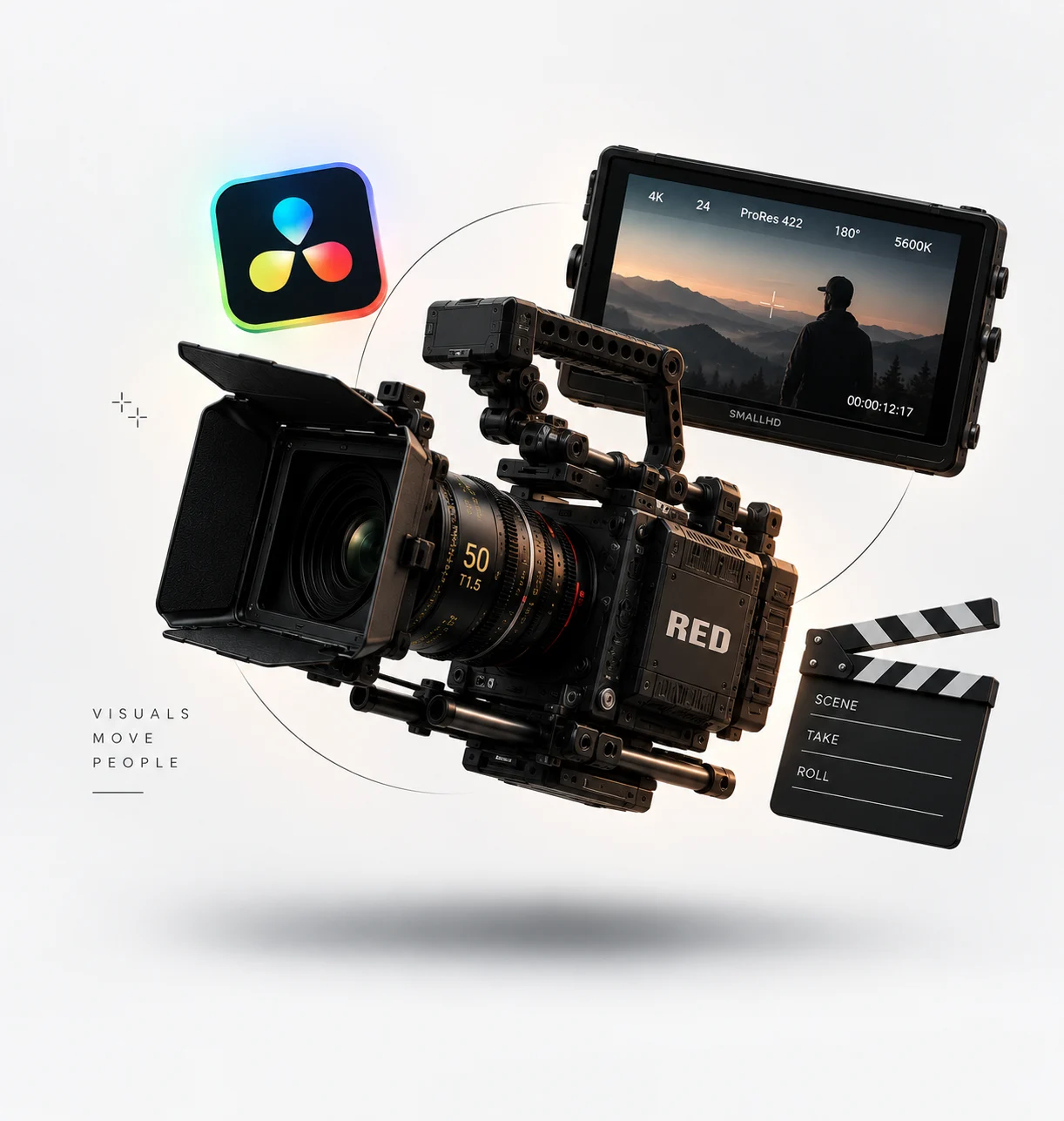
The Cinematography Course at Pikazzo Institute, Chandigarh, is a complete, production-orientated training programme that develops the full professional skill set of a working Director of Photography from the visual language of cinema and the science of light, through hands-on camera operation on cinema-grade equipment, to lighting design, lens selection, camera movement, DIT workflow, drone cinematography, and the on-set professional conduct that makes a DP indispensable to any production. At Pikazzo, the RED Dragon Cinema Camera isn’t a display item. This is the principal instructional resource for this course. RED RAW is shot on every major project, every lighting exercise, and every real-production assignment. Students graduate having logged hundreds of hours on a professional cinema camera system with the footage, the muscle memory and the technical confidence that experience builds.
AI automation course at Pikazzo Institute

Equipments at Pikazzo

CategoryTools Covered
RED Dragon Cinema CameraProfessional cinema camera the primary shooting instrument of this course
Cinema LensesMatched prime lenses for RED mount multiple focal lengths
Anamorphic LensesFor anamorphic cinematography training
Adobe Premiere ProFinal assembly, audio sync, music integration & export
Production Sound KitBoom mic, lavalier systems, audio recorder, monitoring headphones
Editing WorkstationsHigh-spec editing suites running Adobe Premiere Pro & DaVinci Resolve
Colour Grading SuiteDedicated DaVinci Resolve colour grading workstation with calibrated monitor
Grip & Production AccessoriesTripods, sliders, follow focus, matte boxes, C-stands
Green Screen StudioIn-house green screen space for compositing and VFX work
Chapter 02— What You Will Learn

Complete Cinematographer Course Module

Introduction to Cinematography
Photography vs Cinematography
Role of a Cinematographer / Director of Photography
History and Evolution of Cinematography
Cinematography in Film, Advertising and Digital Media
Camera Types
Camera Body and Controls
Camera Sensors
Full Frame vs Crop Sensors
Exposure Triangle
Shutter Angle
Frame Rate
Resolution
Aspect Ratio
Dynamic Range
White Balance
Color Temperature
Focus
Manual vs Autofocus
Camera Formats and Codecs

Understanding Lenses
Prime vs Zoom
Focal Length
Wide-Angle Lenses
Standard Lenses
Telephoto Lenses
Lens Compression
Depth of Field
Focus Distance
Minimum Focus Distance
Camera Height
Camera Position
Shot Sizes
Camera Angles
Rule of Thirds
Leading Lines
Symmetry
Framing
Negative Space
Foreground and Background
Depth and Layering
Visual Continuity

Static Camera
Pan
Tilt
Push In
Pull Out
Dolly
Tracking
Crane/Jib
Handheld
Gimbal
Orbit
Whip Pan
Camera Movement and Emotion
Motivation for Camera Movement
Shot Transitions
Continuity
Screen Direction
180-Degree Rule
Eyeline
Match on Action
Visual Rhythm
Shot Sequencing
Storytelling Through Camera
Introduction to Storyboards
Introduction to Shot Lists

Introduction to Cinematic Lighting
Natural vs Artificial Light
Hard vs Soft Light
Light Direction
Quality of Light
Key Light
Fill Light
Back Light
Three-Point Lighting
Practical Lights
Motivated Lighting
Negative Fill
Bounce Light
Diffusion
Reflectors
Flags
Light Modifiers
Lighting Ratios
Contrast
Shadows
Highlights
Exposure and Lighting Relationship

Color Temperature
Warm vs Cool Light
Mixed Lighting
Color Psychology
High-Key Lighting
Low-Key Lighting
Dramatic Lighting
Rembrandt Lighting
Butterfly Lighting
Silhouette Lighting
Backlighting
Rim Lighting
Night Lighting
Day-for-Night Introduction
Golden Hour
Blue Hour
Practical Lighting
Colored Gels
RGB Lighting
Creating Visual Mood
Lighting Continuity
Exposure for Highlights and Shadows

Camera Rigging
Tripods
Shoulder Rigs
Gimbals
Sliders
Dolly Systems
Follow Focus
Matte Boxes
ND Filters
Polarizers
Camera Monitoring
External Recorders
Focus Pulling
Exposure Monitoring
Waveform
False Color
Zebra
Focus Peaking
Lens Filters
Camera Movement Planning
Multi-Camera Setup
Continuity
On-Set Camera Workflow
Data Management
Media Backup

Introduction to AI in Cinematography
AI-assisted Visual Research
AI Moodboards
Visual Reference Generation
AI Shot Concepts
AI Storyboarding
AI Previsualization
AI Location Concepts
AI Production Design References
AI Lighting References
AI Lens and Shot Exploration
Image-to-Video
AI Camera Movement Concepts
AI-assisted Look Development
AI-assisted Color References
Virtual Production Concepts
AI for Pitch Decks
Maintaining Visual Consistency
Copyright and Responsible AI Use

Advanced Composition
Visual Motifs
Symbolism Through Camera
Perspective and Character
Lens Selection for Emotion
Camera Height and Character Power
Depth and Layering
Foreground Elements
Negative Space
Long Lens Cinematography
Wide Lens Cinematography
Shallow Depth of Field
Deep Focus
Rack Focus
Long Takes
One-Shot Sequences
Advanced Camera Movement
Handheld Cinematography
Gimbal Cinematography
Dolly Movement
Tracking Shots
POV Cinematography
Subjective Camera

Product Lighting
Hero Shots
Macro Product Shots
Camera Movement
Slow Motion
Product Reveals
Advertising Composition
Brand Visual Language
Model Movement
Editorial Lighting
Studio Cinematography
Fashion Camera Movement
Color and Styling
Visual Concept
Performance Shooting
Narrative + Performance
Rhythm-based Cinematography
Creative Lighting
Transitions
Visual Effects

Cinematography for VFX
Green Screen Cinematography
Blue Screen
Tracking Markers
Clean Plates
Camera Tracking Requirements
Lens Data
HDRI Capture
Reference Photography
Lighting for VFX
3D Integration
Virtual Production Introduction
LED Volume Concepts
Virtual Backgrounds
In-Camera Visual Effects
Motion Control Introduction
Previsualization
Post-Visualization
VFX Shot Planning

Understanding a Director's Vision
Director-DP Collaboration
Script Breakdown
Visual Treatment
Shot Design
Storyboards
Shot Lists
Camera Tests
Lens Tests
Location Scouting
Lighting Tests
Technical Recce
Camera Department
Lighting Department
Camera Reports
Shooting Schedule
Production Planning
On-Set Communication
Continuity
Troubleshooting
Working Under Time Constraints
Client/Director Feedback
Professional Set Etiquette
Cinematography Portfolio
DP Reel
Chapter 03— Why the RED Dragon Camera is a Game Changer

The RED Dragon Edge

Let’s clarify what the RED Dragon is and why it matters for your career as a cinematographer.

The RED Dragon is a large-format, high dynamic range professional cinema camera which shoots cinema-quality images in resolutions up to 6K. It is used in big Hollywood productions, high-quality Bollywood films, international ad shoots, and the biggest budget Punjabi films. It shoots in RED RAW, a proprietary RAW format that gives you the most amount of image data to play with for colour grading and post-production flexibility.

Training with a RED Dragon will teach you things that you just cannot learn with a DSLR or mirrorless camera:

A Professional Sensor: How to Know The range between the deepest shadow and the brightest highlight is something the DSLR sensors can’t match. The RED sensor captures latitude. Learning to expose for that latitude, to protect highlights and preserve shadow detail at the same time, and to read a waveform and understand what the sensor is actually seeing – this is the fundamental skill of professional cinematography. You can only learn it by shooting on professional equipment.

Cinema Lens Systems The RED Dragon pairs with cinema lens systems that use prime lenses featuring calibrated, repeatable focus marks, smooth iris and focus rings designed for focus pullers, and optical characteristics that shape the image in ways that still lenses do not. Only by working with it do you learn about focal length, depth of field, bokeh character, lens breathing, and the visual personality of different cinema glass.

RAW Workflow & DIT RED RAW footage needs a professional on-set data management and quality control workflow, and that is the domain of the DIT (Digital Imaging Technician). You will learn how to work with RED RAW data, set up LUT-based monitoring for review on set, perform basic colour conforming, and manage the data pipeline from card to editorial – a skill set that makes you valuable in any professional production environment and that most cinematography graduates from competing institutes have never been exposed to.

The Showreel That Will Get You Hired If you’re a production house, music video director or advertising agency looking at your showreel, they know immediately if your footage was shot on a cinema camera or a DSLR. The latitude, the skin tone rendering, the colour depth, and the sheer visual quality of RED Dragon footage are impossible to fake. Pikazzo students’ showreels are cinema-quality footage, and that difference is visible, believable and career-defining.

Chapter 04
— Career Opportunities

What Can You Do After This Cinematography Course?

Demand for professional cinematographers is ubiquitous in all places where visual content is being generated, and in North India, which signifies one of the most dynamic regional film and content markets in the country. Pollywood is producing more films and more content than it ever has. Punjab has one of the largest music video pipelines in India. OTT platforms are hungry for the regional language content. And commercial production advertising, brand films, and corporate video continue to expand.

Job Roles You Can Apply For:
Job RoleDescription
Director of Photography (DP)The primary creative camera role on any production; commanding the visual language, the lighting, the crew, and the camera for every shot
Camera OperatorOperating the primary or secondary camera under the DP's direction on major productions
First Assistant Camera (1st AC / Focus Puller)Responsible for focus pulling, lens changes, and maintaining camera quality; a critical role on any serious production
DIT (Digital Imaging Technician)On-set data management, colour management, and quality control; one of the most in-demand technical roles on professional productions
Drone Cinematographer / Aerial DPSpecialised aerial camera work for film, music video, advertising, and event production
Cinematographer for Music VideosStreamlining CRM, sales and operations workflows with AI and automation tools
Commercial & Ad Film CinematographerPunjabi music video market is one of the most active and accessible markets for a Chandigarh-based cinematographer
VFX ArtistProduct and brand film shoots across Chandigarh, Delhi, and the North Indian advertising market
VFX Wedding & Event CinematographerOTT factual content, NGO films, government productions, travel and culture documentaries

Industries Hiring Cinematographers Actively: Pollywood Film Production | Punjabi Music Industry | OTT Platforms | Advertising & Brand Agencies | Corporate Video Production | Wedding & Event Production | News Media & Broadcast | Documentary Production | Social Media Content Studios
Cinematographer Salary in India: Entry-level camera assistants (1st AC) working on productions in Chandigarh earn ₹15,000–₹30,000/month. DPS engaged in producing music videos and commercials in North India earns ₹25,000–₹80,000 per project. Established DPs working on Pollywood feature films are making ₹3–15 lakh per film. Senior DPs on big Bollywood and OTT productions earn between ₹15 and ₹50 lakh per project. Premium freelance wedding and event videographers in Punjab charge between Rs 50,000 and Rs 3 lakh per event.

Chapter 05 Why Pikazzo is the Best Cinematography Institute in Chandigarh

Why Choose Pikazzo Institute

Only the North India Cinematography Institute is to train students on a RED Dragon. This is the one most important fact of Pikazzo’s Cinematography Course. Not ‘access’ to a RED Dragon during a demo session. No supervised RED shoot by the end of the course. The main camera in this course is the RED Dragon, and the instrument students work with from their first practical session to their final project. The impact this has on the quality of learning, the quality of footage created and the quality of the show reel is fundamental and visible.

DIT Training: The skill no other course offers. DIT is one of the most in-demand technical roles in professional film productions, and almost none of the cinematography courses in India teach it. The RED RAW management, media offload, on-set LUT workflows, dailies creation, and data safety skills taught in the Pikazzo DIT module all make graduates immediately employable in professional production environments and create a second career track alongside DP work.

Full Drone Cinematography Module: Drone footage is now standard across every production format: film, music video, advertising, and event. Pikazzo’s dedicated drone cinematography module with hands-on DJI drone operation and real aerial shooting exercises guarantees that graduates will be able to offer drone cinematography as part of their professional skill set. Most other institutions make fleeting mention of drones. Pikazzo teaches it in its entirety.

Anamorphic Cinematography: A Premium Career Differentiator Anamorphic lenses offer the most uniquely cinematic visual character of all photography: the horizontal lens flares, oval bokeh and unique rendering that instantly communicate premium production value. Very few cinematographers in North India are trained for shooting anamorphic. The anamorphic module from Pikazzo makes our graduates a rare commodity in the regional market and more attractive to directors looking for that cinematic look.

10 Years of Training in Creative Arts Built-in Visual Intelligence Cinematography at Pikazzo is taught in a creative arts ecosystem. Our students are immersed in a creative culture where graphic designers, animators, VFX artists, and motion designers collaborate closely. This atmosphere creates the visual intelligence, the design sense, and the compositional instinct that transform technical camera skill into genuine cinematic art.
  • 10 YearsTraining Creative Professionals
  • 15+Industry-Focused Courses
  • 100%Placement Assistance
pikazzo

Need Guidance?

Our mentors are just one click away to help you stay on track.

FAQFAQ

Cinematography Course FAQs — Pikazzo Institute, Chandigarh

Pikazzo provides the best cinematography courses in Chandigarh that offer hands-on training in camera operation, cinematic lighting, composition, film production, portfolio development, and placement support.

Yes. Our Cinematography Course after 12th is ideal for students, aspiring filmmakers, photographers, content creators and anyone who loves filmmaking.

Certainly. From the very basics of cameras, this Beginner to Expert Cinematography Course will graduate you with professional cinematography techniques and film production.

Pikazzo Institute runs a cinematography course in Chandigarh with live productions, portfolio creation, internship and placement assistance with an industry focus.